Bartow's vintage inventory looks like a bargain on the map. Redfin currently shows 34 vintage homes for sale in Bartow at a median listing price of $316K, and Bartow's median home sale price of $306,000 sits below the national median of $406,000 and slightly below nearby Lakeland at $310,000. Buyers see that number, compare it to a newer Winter Haven or Lakeland build, and assume the difference is pure savings.
It isn't. The list price is the opening line of three negotiations, not one. You will negotiate with the seller, then with a Florida insurance underwriter reading a 4-point report, and, if the property sits inside the City of Bartow's locally designated historic district, with a design review process that decides which exterior changes you're allowed to make. That is the real mechanism behind the days-on-market gap: most homes for sale in Bartow stay on the market for 91 days and receive 1 offer, and homes in Bartow sell after 104 days on the market on average, compared to 48 days a year earlier. Deals are slower here because more of them stall in the second and third rooms.
The gap between the list price and the closable price
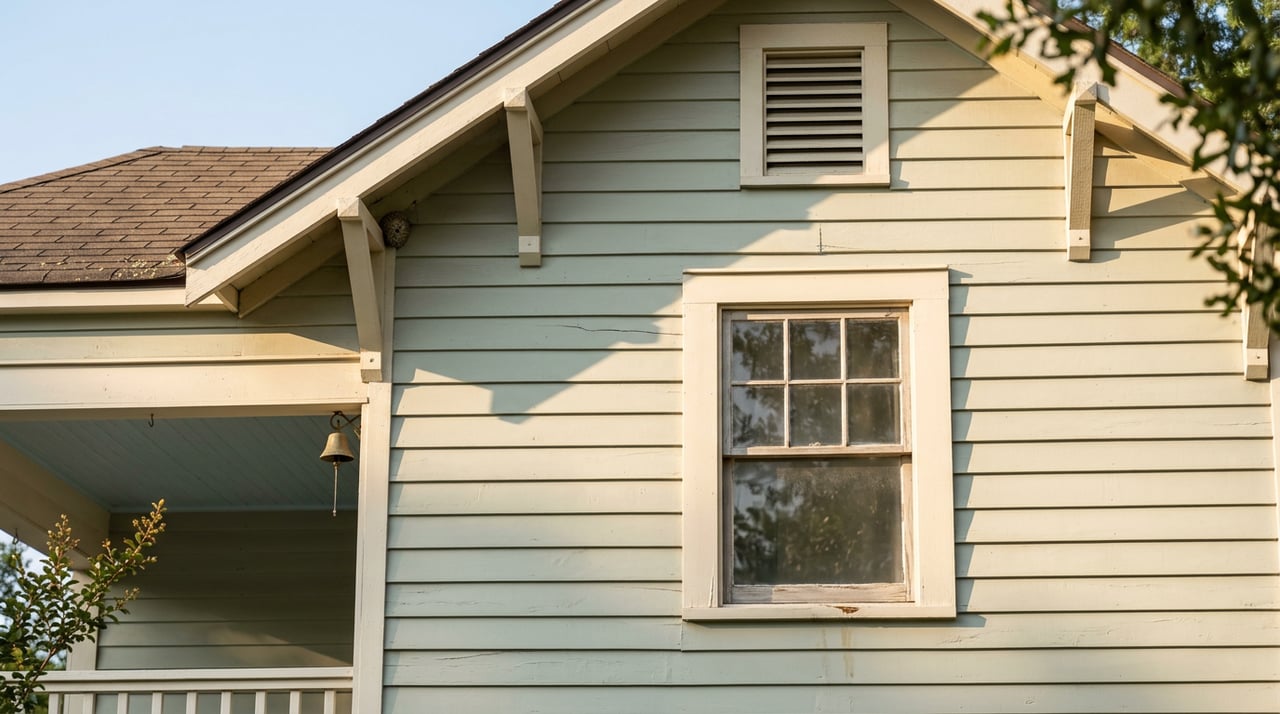
A Braswell Addition ranch built in 1956 and an East Bartow bungalow built in 1912 will both photograph well and price attractively. The friction shows up after inspection, when two separate reviewers look at the same house and ask different questions.
The general home inspector is looking for what's wrong. The insurance underwriter is looking for what's insurable. In 2026, those are not the same list. Any home 40 years or older will almost certainly need a 4-point before a new carrier will write the policy, and at 30 years, most companies still require one. A standalone 4-point inspection runs $75 to $150 in most Florida markets, which is trivial. The consequential number is what the report triggers.
What the 4-point actually flags in Bartow's older stock
The 4-point looks at four systems. Each has a specific failure mode that shows up over and over in homes of the vintage Bartow sells.
Roof. Asphalt shingle roofs are typically insurable up to 15 to 20 years, and after 15 years, expect a required inspection and possible coverage limitations. Many downtown-area Bartow homes are on their second or third shingle roof; the age of the current one, not the age of the house, is what the carrier prices.
Electrical. Federal Pacific Electric panels are one of the most common reasons homes fail 4-point inspections, and these panels have a long history of safety concerns that are often unacceptable to insurers. Homes with Federal Pacific or Zinsco panels, or aluminum wiring, may be denied coverage. If you're touring a home built between roughly 1950 and the mid-1980s, the panel brand is a five-second check that can save you a week of underwriting drama.
Plumbing. Polybutylene plumbing is one of the most commonly rejected pipe materials, known for failure risk and frequently unacceptable to Florida insurers. Older galvanized plumbing systems often fail because corrosion can restrict water flow and increase leak risk. A 1920s Queen Anne with original galvanized supply lines is charming and uninsurable in the same breath until it's re-piped.
HVAC. HVAC systems should generally be less than 13 years old to clear a clean 4-point without a note that follows the policy around like a bad reference.
There is real 2026 movement worth pricing in. Heading into 2026, several carriers have softened their underwriting guidelines, some are accepting older roofs with limited water coverage or actual cash value roof endorsements instead of flat-out declining, and others have pushed their 4-point requirement threshold back to 25 or 30 years. The homes that were unfinanceable in 2024 are quietly getting placed again, but only if the agent knows which carriers moved.
What Polk County's insurance geography saves you
The reason Bartow keeps drawing buyers who could stretch to a Tampa or coastal address is the carrying cost, not the sticker. Florida homeowners premiums average around $8,458 a year, roughly three times the national average, and range from about $5,500 in inland counties like Polk and Marion to $11,000+ along the coast in Miami-Dade and Monroe. On a $306,000 house, the roughly $3,000 annual premium delta between Polk and a coastal county is the mortgage equivalent of about $45,000 of principal at current rates. That is where the true Bartow discount lives.
The step most out-of-town buyers miss
If the property sits inside the City of Bartow's local historic district, the sale has a third reviewer. It doesn't take a fee at closing, but it takes veto power over what you do next.
Historic districts often require a Certificate of Appropriateness before exterior changes, including windows, siding, porches, and additions, while interior renovations and system upgrades must meet current building codes. Local historic district status is what typically triggers design review for exterior changes; if the property is in a local historic district, exterior changes often require a Certificate of Appropriateness, while interior work usually follows building codes but may not need historic design review.
Practically, that means:
- Swapping original wood windows for vinyl is a review question, not a Home Depot decision.
- A metal roof, which the insurance carrier will love, may need an approved profile and color.
- A screened-in front porch addition on a 1908 cottage is a design submittal, not a weekend project.
The city's Code of Ordinances is codified through 2025-04 on Municode, and the planning office is the right first call before you write an offer on anything with "Historic" in the MLS remarks. Sellers rarely disclose district status because it's a matter of address, not condition, so it lives in the buyer's due-diligence column.
How to price the second and third negotiations into your offer
Instead of asking "is $316,000 fair," ask three separate questions and stack the answers.
| Underwriting item | Typical remediation | What it does to your offer |
|---|---|---|
| Federal Pacific or Zinsco panel | Full panel replacement | Ask for credit or seller-completed swap before closing |
| Polybutylene supply lines | Whole-home re-pipe | Material; renegotiate or walk unless priced in |
| Shingle roof past 15 years | New roof or ACV endorsement | Credit, or shop a carrier that will write ACV |
| HVAC over 13 years | Replacement | Small credit; not a deal-killer |
| Local historic district | Certificate of Appropriateness process | Time cost, not a dollar cost, on any planned exterior work |
The offer that clears in Bartow is the one that has already done this math. Ask about "ordinance or law" coverage that helps pay for required in-kind repairs if local preservation rules apply. That single endorsement, paired with a carrier that still writes 1920s frame houses, is often the difference between a closed file and a stalled one.
Financing paths that fit the inventory
Conventional loans work fine on a Bartow home that has already been updated. For the ones that haven't, the two products that actually match the stock are renovation-friendly options like FHA 203(k) or Fannie Mae HomeStyle. Both let a buyer wrap the re-pipe, panel swap, and roof into the mortgage instead of trying to solve $30,000 of pre-closing work with a personal loan.
One myth to retire: federal historic rehabilitation tax credits mainly apply to income-producing properties, not primary residences, though local and state preservation offices sometimes have programs or grants for owner-occupied work. If a listing agent leans on "you'll get the tax credit back" as a reason the numbers pencil, treat that as a flag, not a feature.
Frequently asked
Does Bartow have condo issues from the new 2026 reserve rules? Downtown Bartow's small footprint of attached product means most buyers won't touch this, but the rule matters if you're considering a townhome association. As of January 1, 2026, the grace period ended, and under Section 718.112, Florida Statutes, nearly all condo buildings three stories or higher must complete milestone structural inspections and fully fund reserves for major components, and boards can no longer vote to waive them. Read the reserve study before you write.
Is the January 2026 price drop a signal? In January 2026, Bartow home prices were down 15.5% compared to last year, selling for a median price of $268K, with homes selling after 104 days on the market compared to 48 days last year, and 14 homes sold that month, down from 40 last year. That is a thin-sample month during a soft season. The 12-month picture from the same period sits closer to $315,990. Treat the January print as noise until the spring data lands.
Which Bartow neighborhoods concentrate the older stock? Popular neighborhoods include Square Lake, Club Colony, Floral Lakes, West Bartow, and Gordonville, plus the Braswell Addition for mid-century ranches and the streets around the Polk County History Center for the early-twentieth-century inventory.
Bartow rewards buyers who show up with the second and third negotiations already scoped. If you're weighing a historic-district cottage against a newer build a few miles out, The Small Team can walk the property with you, pre-flag the 4-point risks a listing photo won't show, and connect you with the design-review and insurance conversations before they cost you your closing date.
Know Your Home's Value