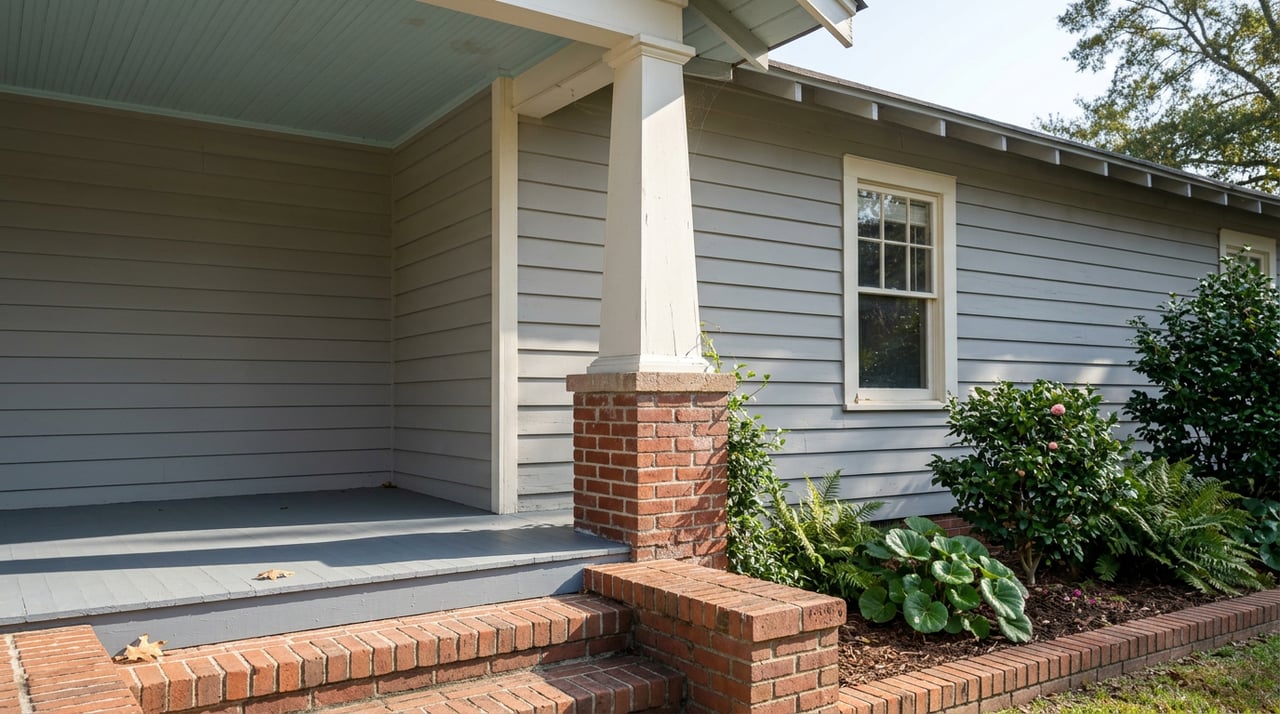
Walk the block where the Hyde Park Spanishtown Creek Civic Association meets its northern edge and you'll find houses that look nearly identical, built in the same decade, sided in the same wood siding, sitting on lots of the same width. But as of January 5, 2023, some of those houses answer to a different set of rules than their neighbors two doors down. That's the date the City of Tampa expanded the Hyde Park Local Historic District boundary, pulling 184 additional buildings in the Spanishtown Creek and Historic Hyde Park neighborhood association areas under formal review for the first time. A homeowner who bought in 2019 might still think of their house as just an old house. Since 2023, it's a contributing structure, and that changes what happens the next time a roof needs replacing.
That's the thing nobody tells you when you start comparing "historic Tampa neighborhoods" on a spreadsheet of median prices. Hyde Park, Seminole Heights, Tampa Heights, and Ybor City all carry the word historic, and the portals will happily sort them by price per square foot as if that word means the same thing everywhere. It doesn't. Two of Tampa's oldest neighborhoods answer to entirely different review boards, one district's boundary just moved without most sellers mentioning it, and comparing these four areas takes more than a price-per-square-foot filter.
Four districts, two rulebooks
The City of Tampa currently maintains four Local Historic Districts: Hyde Park, Seminole Heights, Tampa Heights, and Ybor City, alongside 64 individually designated Local Historic Landmarks scattered across the city. Three of those districts, Hyde Park, Seminole Heights, and Tampa Heights, are reviewed by the same body, the Architectural Review Commission. Ybor City is not. Exterior work there goes to the Barrio Latino Commission, a separate board with its own review calendar and its own read on what belongs in a cigar-worker's cottage versus what belongs on a Craftsman bungalow eight miles north.
This matters more than it sounds like it should. If you're comparing a listing in Seminole Heights against one in Ybor City, you're not just comparing two neighborhoods. You're comparing two different bureaucracies, each with its own pace, its own board members, and its own sense of what counts as appropriate. A contractor who has spent years getting projects through the Architectural Review Commission may be starting from zero with the Barrio Latino Commission, and vice versa.
The line that moved without a memo
The Hyde Park expansion is worth sitting with, because it's the clearest evidence that "historic district" is a boundary that can shift, not a fixed fact about a house. Before January 2023, an owner in the Spanishtown Creek area might have had an old house with no formal review requirement for a new roof or a fence. After the boundary took effect, that same house, unchanged, sits inside the local historic district and is now subject to Certificate of Appropriateness review for exterior work.
The city's own record shows the process behind that change took nearly two years, from a May 2021 application by the Hyde Park Spanishtown Creek Civic Association and the Historic Hyde Park Neighborhood Association through a City Council public hearing in December 2022 and final adoption in January 2023. That's not a fast-moving process, but it's also not one that shows up on a listing sheet. A buyer doing due diligence on an older Hyde Park home should ask directly whether the parcel falls inside the current district boundary, not the boundary as it existed five years ago.
What the review process actually adds to your timeline
Here is where the four districts start to feel less like neighborhoods and more like different operating systems. The City of Tampa requires a Certificate of Appropriateness before any exterior change in a Tampa local historic district, including a new roof, replacement windows, a fence, or an addition. That's separate from your standard building permit. Some of these can be issued by ARC or BLC staff without a hearing. Others have to go in front of the full commission at a public meeting.
Practically, that means the timeline on a Hyde Park or Seminole Heights renovation includes a step that a Riverview or Wesley Chapel renovation simply doesn't have. If your project requires a hearing, include the applicable meeting schedule in your renovation timeline. The review process and timing vary by district and project.
A historic rehabilitation tax exemption to consider before closing
The flip side of all that review is a program buyers can consider before renovating: the City of Tampa's Historic Property Ad Valorem Tax Exemption. If you spend at least $10,000 on a qualifying rehabilitation of a contributing structure or individually designated landmark, and that project goes through the same ARC or BLC review process, the increase in assessed value from the improvements can be exempted from property taxes for up to 10 years, according to the Florida Senate.
The process runs in two parts. Part I, the pre-rehabilitation application, has to be approved before you start any demolition or construction, and it requires a $250 application fee. After the work is done, Part II documents the completed rehabilitation. It's a real incentive that can offset the added review burden, but it only works if you apply for Part I before you touch the house, not after.
The district lines don't touch your roof, but Florida does
One thing every one of these four districts shares, regardless of which commission reviews your fence: insurance underwriting doesn't care about architectural review boards. Mesa Insurance explains that Florida law prevents insurers from denying or canceling a policy solely because a roof is under 15 years old. Earlier this year, Senate Bill 808 and House Bill 815 moved through the Florida Legislature aiming to bar insurers from refusing to issue or renew a policy based on roof age alone, carrying a proposed effective date of July 1, 2026, according to Lewis Insurance. Confirm with your insurer or agent whether that protection has taken hold before you assume an older roof is covered.
For a buyer weighing a 1920s Hyde Park house against a 1930s Seminole Heights bungalow, this means the roof condition question sits on top of the historic review question, not instead of it. You may get a Certificate of Appropriateness approved for a like-for-like replacement roof.
What the price tiers are actually telling you
Here's where the four districts separate on the numbers. Hyde Park has traded around $725,000 as a median sale price in June 2026, though a tighter Redfin window on just 12 sales through May 2026 showed a median closer to $554,000, a gap that says more about how few homes trade hands there in any given month than about a sudden price drop. Seminole Heights sold at a median of roughly $558,000 in early 2026, up meaningfully year over year, with renovated three-bedroom bungalows commonly listing well under Hyde Park's entry point for a comparable size. Ybor City sits meaningfully lower still. Its historic properties have a separate review track through the Barrio Latino Commission, and buyers can consider permit history alongside sale price.
None of those numbers exist in a vacuum. Hyde Park has Bayshore Boulevard frontage and its SoHo dining corridor along South Howard Avenue. Seminole Heights carries a lower entry price, but falls under the same ARC review process as Hyde Park. Ybor City carries the lowest entry price and an entirely different commission governing what you can do with it. A planned project's scope and condition can matter as much as the neighborhood's median.
A short FAQ
Does buying in a historic district mean I can't get a normal building permit? No. A Certificate of Appropriateness and a building permit are two separate approvals. The COA confirms the exterior work fits the district's design guidelines. The building permit still covers structural, electrical, and code compliance the same way it would anywhere else in the city.
How do I find out if my specific address is inside a district boundary? Call the Architectural Review and Historic Preservation Division directly, since boundaries have changed before and a parcel's status isn't always obvious from the street. The city's historic preservation office keeps current district maps and can confirm a specific address.
Do interior renovations need review? Ask preservation staff about your specific project, since scope can blur the line, particularly on additions that touch both interior and exterior walls.
If you're weighing one of these four neighborhoods against another, the sale price is only the first number. The second is how much time and paperwork sits between you and your first exterior project. The Small Team works across Tampa's older neighborhoods regularly enough to know which commission reviews which block, and can walk you through what a specific address actually commits you to before you write an offer. Know Your Home's Value.
This article is general information, not legal, tax or financial advice. Consult a qualified professional about your situation.