Pricing a lakefront home in Winter Haven is not the same as pricing a house in a typical subdivision. Lakes vary in size, depth, views, and boating access, and each detail can change your value. If you are thinking about selling, you deserve a clear, data-backed approach that explains where your number comes from and how to defend it. In this guide, you will see exactly how we evaluate lakefront features on the Winter Haven Chain of Lakes and translate them into a smart list price. Let’s dive in.
What makes Winter Haven lakefront unique
The Winter Haven Chain of Lakes is a connected network of lakes that shapes how buyers think about value. Each lake offers a different mix of size, depth, water clarity, and navigability, which is why two homes with similar square footage can sell very differently. You can explore public maps and local amenities through the City of Winter Haven to see how connectivity and access vary around town.
Depth and water quality are not the same on every shoreline. The Water Atlas provides lake-by-lake data that helps you understand depth, bottom type, and access points. These lake characteristics affect the types of boats that fit at your dock, whether you can reach other lakes in the chain, and how usable your shoreline is throughout the year.
Florida’s broader market trends also influence pricing and timing. Waterfront homes often keep strong demand, but they can be sensitive to financing and insurance changes. For a current view of statewide and regional patterns that set the backdrop for Polk County, you can review reports from Florida Realtors.
The factors we weigh most
Shoreline frontage and usable access
Linear feet of frontage is a core driver of lake value. More frontage can support a larger dock and better privacy, which many buyers will pay for. We also look closely at how usable the shoreline is, since narrow coves or awkward canal angles may limit where you can place a dock or how you maneuver a boat.
Water depth and bottom type
Depth at the end of the dock determines boat size and year-round usability. A deeper, firm-bottom area usually supports more boat types and can command a premium. If water is too shallow or soft-bottomed, we may adjust pricing to reflect reduced utility or added maintenance.
Open lake vs canal and Chain access
Open water on a larger lake with wide views typically sells at a premium over canal frontage. That said, a well-placed canal home with easy access to the chain can be highly desirable. Navigability within the Chain of Lakes and straightforward routes to public ramps or recreational nodes can add value to the overall package.
View quality and orientation
Buyers respond to views the moment they step onto the back patio. Long sightlines, broad open-water views, and attractive sunrise or sunset orientations increase perceived value. Obstructions, narrow corridors, or dense shoreline vegetation can limit the view and may require thoughtful adjustments.
Dock, lift, seawall, and shoreline improvements
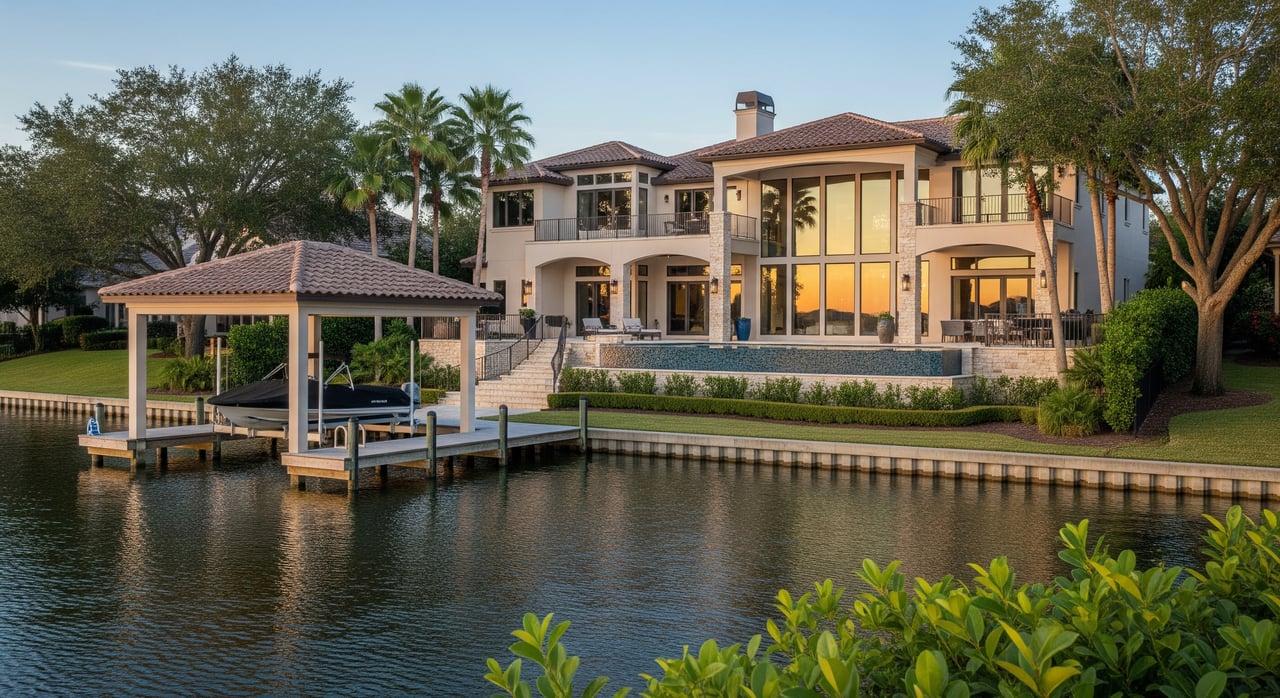
A permitted, well-built dock or boathouse with a functional lift is a tangible asset. We consider replacement cost and market demand to estimate contributory value. Seawalls and shoreline stabilization matter too. Evidence of needed repairs or non-permitted structures will reduce the number of interested buyers and can impact price.
Flood zones and elevation
Flood zone status affects insurance costs and buyer confidence. We review FEMA flood maps to understand risk, elevation, and how that translates into insurability and long-term costs. You can check a property’s flood zone using the FEMA Flood Map Service Center.
Home condition, size, and layout
The house still matters. Bedrooms, baths, square footage, age, and updates all influence price, and the lake premium stacks on top of that base value. A well-maintained home that feels move-in ready helps capture more of the lake premium.
Zoning, easements, and riparian rights
Recorded easements or restrictions on submerged lands and riparian rights can change what you can build or repair on the shoreline. We verify public records and title data early to avoid surprises. Clear rights and simple permitting history help maintain value.
Nearby amenities and HOA rules
Proximity to parks, services, and community amenities contributes to demand. HOA or community rules that limit boat types, dock size, or storage can narrow the buyer pool and should be factored into pricing. Neutral, factual disclosure builds trust and keeps deals on track.
How we select and adjust comparable sales
Start on the same lake
We begin with closed sales from your lake within the last 6 to 12 months. We match frontage type, usable length, and boating access as closely as possible. If sales are sparse, we expand to connected lakes with similar depth and access characteristics, then to older sales with time adjustments.
Control for the house, then isolate the water
We first line up basics like square footage, bed and bath count, lot size, age, and condition. Once these are comparable, we isolate waterfront attributes such as frontage length, view quality, dock and lift, and whether the location is open water or canal. This two-step approach keeps adjustments grounded and understandable.
Use time and market context carefully
Waterfront turnover can be seasonal and limited. When we use comps beyond 12 months, we apply time adjustments if market conditions changed. To understand the overall direction of prices and days on market in Florida, we monitor trends published by Florida Realtors and cross-check with local MLS data.
Derive adjustments from the market
Rather than rely on a canned price-per-front-foot, we use paired-sales analysis when possible. For docks and seawalls, we compare replacement cost with observed market premiums to estimate contributory value. When we present your price range, we show each adjustment in plain language so you can see the “why,” not just the final number.
Permits, insurance, and rules that move value
Dock and shoreline permitting
In Florida, docks and shoreline work often require approvals from state and sometimes federal agencies. We recommend confirming permit history before going to market. Learn more about permitting expectations through the Florida Department of Environmental Protection and the U.S. Army Corps of Engineers.
Flood insurance and FEMA zones
Insurers use FEMA flood zone data to price risk and determine coverage options. Map updates can change a property’s classification, which impacts premiums and loan requirements. You can review current maps and learn about zones through the FEMA Flood Map Service Center.
Environmental and community constraints
Shoreline vegetation, protected species, or lake protection programs may limit alterations or require permits. HOAs or special districts can set rules for dock size or boat types. For public records and county resources, the Polk County official site is a helpful starting point.
Our step-by-step pricing workflow
- Pre-list document check
- Survey with shoreline measurements and any recent title or abstract.
- Copies of dock and seawall permits or denials, plus utility and septic records.
- Elevation certificate if available, HOA covenants, and any lake-related easements.
- Onsite lakefront inspection
- Measure usable shoreline, confirm dock and lift condition, and note seawall integrity.
- Observe depth at the dock if safe, and cross-check with the Water Atlas.
- Document view corridors, adjacent uses, and any navigation constraints like bridges or narrow canals.
- Comparative analysis
- Pull closed sales on the same lake first, then connected lakes as needed.
- Quantify differences for frontage, water type, view, depth, dock, and flood factors.
- Cross-check dock and seawall values with current replacement costs to estimate contributory value.
- Seller briefing and pricing strategy
- Provide a clear summary: base house value plus a waterfront premium that reflects frontage, view, access, and risk.
- Share 3 to 5 closed comps and 2 to 3 active listings for context, with transparent adjustments.
- Align on a recommended list price and a minimum acceptable net based on your goals.
- Post-listing monitoring
- Track buyer feedback about the shoreline, dock, navigability, and flood concerns.
- Compare your position against competing waterfront listings on a per-lake basis and update comps every 30 to 60 days in changing markets.
What you can do now to strengthen price
- Gather documents early. Pull your survey, permits, elevation certificate, HOA rules, and any contractor bids for shoreline or dock work.
- Schedule a dock and seawall checkup. Address safety concerns and simple repairs that could derail a buyer’s inspection.
- Improve usability and views. Trim vegetation within allowed guidelines and tidy the path to the dock to highlight access and sightlines.
- Clarify navigability. If you have a straightforward route to open water or across the Chain, make it easy for buyers to see that advantage.
- Prepare insurance info. Obtain quotes or supporting documents for flood and homeowners coverage so buyers can quickly assess total cost.
Why work with a lakefront specialist
Waterfront pricing is part science and part local know-how. You need someone who understands how frontage, depth, view, and permits interact to shape demand in Winter Haven. Our team’s lakefront focus means you get a clear valuation model, practical pre-list advice, and a marketing plan built for shoreline lifestyle buyers. Combined with a boutique, high-touch process, you can list confidently and negotiate from a position of strength.
If you are ready to understand your home’s true market position and plan a smart sale, connect with The Small Team. We will walk your shoreline, verify the details, and craft a pricing strategy that reflects the best of your lakefront. Know Your Winter Haven Home’s Value.
FAQs
How does shoreline frontage affect price in Winter Haven?
- More usable linear feet of frontage typically supports higher value because it improves dock placement, privacy, and boating utility, which many buyers prioritize.
What if my dock is unpermitted or needs repairs?
- Non-permitted or failing structures can reduce value and delay closing; confirm permits through relevant agencies and consider repairs so buyers see a safe, compliant dock.
Do canal-front homes sell for less than open-lake homes?
- Often yes, although a canal with easy access to the Chain can still be highly desirable; view width, navigability, and depth determine the size of any adjustment.
How do flood zones impact pricing and insurance?
- Higher-risk FEMA zones usually mean higher insurance costs and a smaller buyer pool; we confirm zone status and factor insurability into your pricing strategy.
What data sources do you use to verify lake depth and access?
- We pair onsite observations with the Water Atlas, the City of Winter Haven, and public records to validate depth, connectivity, and shoreline details.